
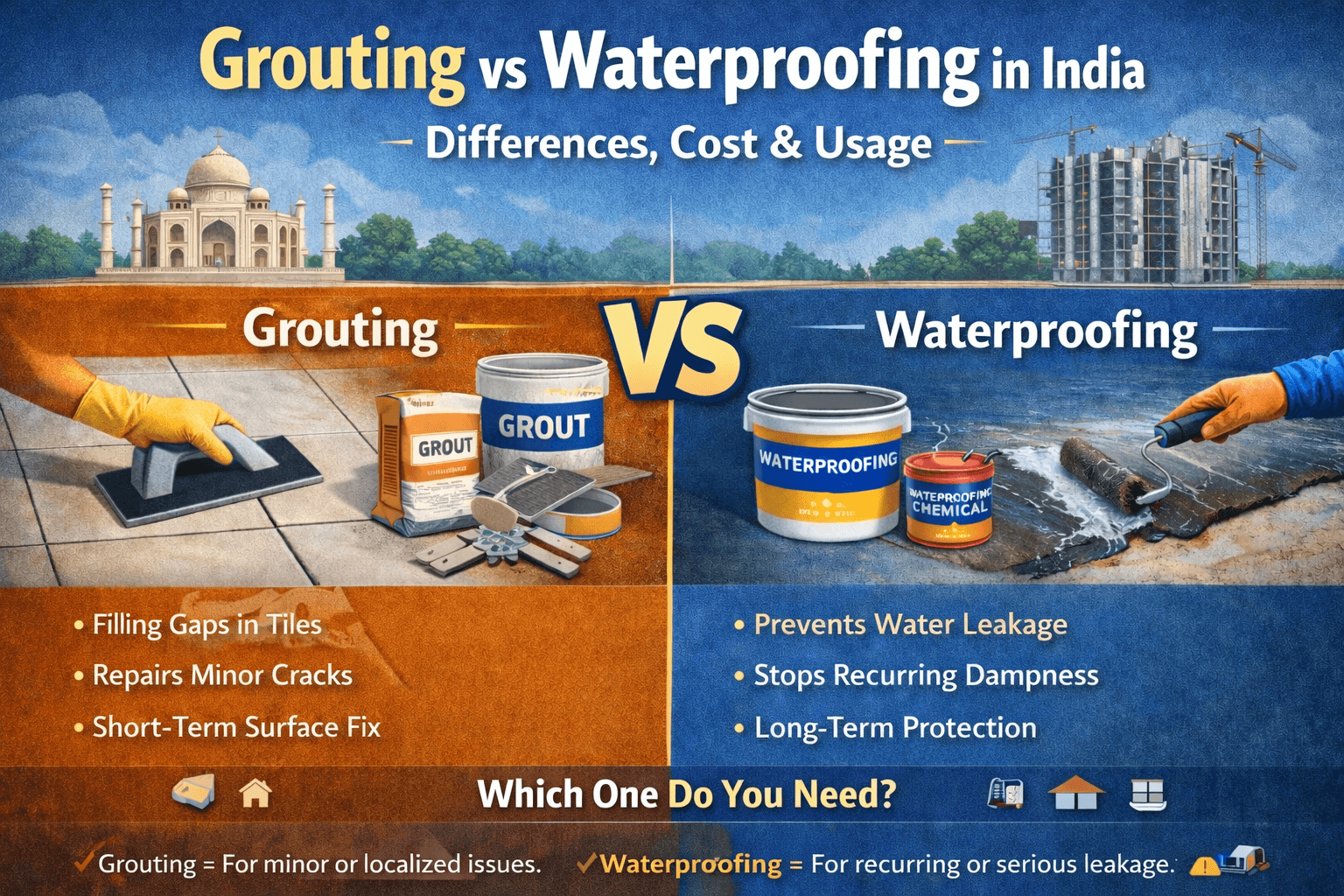
Grouting vs Waterproofing in India | Differences, Cost & Usage
Water leakage is a common issue in Indian homes, especially in bathrooms, terraces, roofs, and external walls. Homeowners often confuse grouting with waterproofing, but both serve very different purposes. Choosing the wrong solution can lead to recurring leaks and higher repair costs.
What Is Grouting?
Grouting involves filling small gaps, tile joints, or minor cracks to reduce surface-level seepage.
Common uses in India:
- Bathroom and kitchen tile joints
- Small wall or floor cracks
- Around plumbing fixtures
Grouting is suitable for:
- Hairline cracks
- Minor, localized seepage
Limitations:
- Short-term solution
- Does not stop structural water penetration
- Not effective for terraces, roofs, or external walls
👉 Grouting is a repair method, not waterproofing.
What Is Waterproofing?
Waterproofing creates a protective barrier that prevents water from entering the structure of the building.
Common waterproofing areas:
- Terraces and roofs
- Bathrooms and toilets
- External walls
- Basements and podiums
Popular waterproofing methods in India:
- Cementitious waterproofing
- Liquid membranes (PU, acrylic)
- Bituminous coatings
- Brickbat coba
Waterproofing is suitable for:
- Recurring leakage
- Damp walls or ceilings
- Monsoon-related seepage
- Older buildings (5–7+ years)
Which One Do You Need?
- Choose grouting for minor, recent, and localized issues.
- Choose waterproofing if leakage is recurring, spreading, or worsening during monsoon.
Many Indian homes undergo repeated grouting when proper waterproofing is actually required, leading to unnecessary expenses.
Conclusion
- Grouting = Temporary repair
- Waterproofing = Long-term protection
Understanding this difference helps homeowners and NRIs make informed maintenance decisions and protect their property value.
How Ghar Befikar Supports Homeowners
At Ghar Befikar, we don’t just coordinate repairs—we guide our clients in managing their properties responsibly. We help homeowners understand the right maintenance approach, avoid temporary fixes, and make informed decisions that protect their property in the long term.
Because effective property management starts with the right guidance.